



Vavasour Powell served as rector of Holy Trinity church, Dartford, at a difficult time when a war weary down was devastated by plague in 1644. He inspired Dartfordians with his bravery and his politics and paved the way for Levellers John Lilburne and John Wildman to come to the town in 1648. Although Dartford was adjacent to Crayford, it seemed to have a very different political outlook. Whereas Crayford was very much a Royalist town, with a traditional Anglican outlook, Dartford was far more radical with a stronger seam of support for Parliament. The influence of Vavasour Powell helped to establish this difference. This article attempts to look at why this was.
Vavasour Powell: A Fiery Welsh Puritan in Dartford
Vavasor Powell was a fiery puritan, who was born in Radnorshire, Wales, in 1617. He began preaching in 1640 and was arrested many times because of his nonconformist views.
Powell came to Holy Trinity Church, Dartford in 1644, to replace its former rector, John Denne, who Like Dr Thomas Vane at Crayford had been removed by Parliament. Dunkin highlighted how difficult it had been for Dartford to find a replacement rector:
It appears the parishioners were unable to procure a competent vicar before July this year, when the celebrated Puritanic divine, Vavasor Powell was appointed.
Powell arrived in Dartford during an outbreak of the plague. In consequence,
many houses were shut up as the only means of keeping the plague at bay. Dartford’s parish records record that,
A seriousness pervades the whole town, and there is daily service in the church and many persons having the sickness upon them attend…yet amidst this danger, and while many of the bodies dying of infection are carried by the vicar’s window, he is mercifully preserved. Holy Trinity, Dartford Church Wardens Accounts 1644
The newly appointed rector Vavasor Powell soon won over the Dartford parishioners with his dedication to the sick:
Yet amidst this danger, and while many of the bodies dying of the infection are carried for interment by the vicar’s [ Mr. Powell’s) window, he is mercifully preserved.
In a matter of months in the summer of 1644, Powell conducted 62 burials—many being entire families. Dartford historian John Dunkin highlighted his bravery in staying at his post at Holy Trinity as plague ravaged the town:
‘When he had resided at Dartford about two years and a half, the plague broke out violently in the town, many houses were shut up, and the dead bodies carried out by his chamber wall and windows, yet he did not discontinue his labours, but preached constantly three times a week; and though some of them that had the sickness upon them came publicly to hear, yet both he and his family were preserved from the contagion!’ The History and Antiquities of Dartford: With Topographical Notices of the Neighbourhood: Author: John Dunkin 1844
The Civil War Brought the Plague along the Dover Road
Parish records at St Paulinus, Crayford indicate that the whole of north Kent was in the grip of the plague. As soon as the plague arrived in London in 1644, it would have been only a matter of days before cases would crop up in Crayford and Dartford. Locals would try to avoid contact with strangers, but It was impossible to stop travellers moving through Crayford along the Dover road from London.
In the 16th and 17th centuries, successive epidemics of plague in England spaced over 10, 20, or 30 years produced mortality rates as high as 20% in urban areas, like Crayford and Dartford. The plague caused short-term economic damage to a country since all those who had the means left a stricken area and prohibitions on trade were put in place. The plague also threatened family life. Evidence of the widespread hardship brought about by war, famine and plague can be seen in Bexley. Crop failures brought famine as well as plague to north Kent. Bexley rector Nicholas Frankwell was particularly hard hit at this time. With little tithe money to survive on, he secretly sold (stole?) part of the parish silver to top up his depleted income! (Frankwell had been rector since 1610 and unlike Vane and May at Crayford would survive the war in post).
For many, including Vavasour Powell, it seemed that they were living through apocalyptic times. Powell firmly believed in the prophecies included within the Bible’s, ‘Book of Revelations’. Powell would later identify with an extreme Puritan sect, The Fifth Monarchists, who believed that the world was coming to an end. They believed that the demise of King Charles I, would see the arrival of King Jesus to bring about a ‘New Jerusalem,’ a heaven on earth.
The Harshness of the Plague Orders
A plague could wipe out individual families, whilst social norms such as caring for the sick and burying the dead suffered. During the 16th and 17th centuries, the state in general took little interest in medical provision. The sick often relied on their family, friends, neighbours, or clergymen like Vavasour Powell,
The Privy Council had set out Plague Orders in 1579 that created a nationwide set of rules for dealing with plague. Notoriously, the Orders declared that the sick should be shut up in their homes for six weeks and any healthy occupants should also be shut up with them. This was certainly the case in Dartford when plague stalked the streets around Powell’s Holy Trinity church. Kate Morton’s painting above shows a boarded-up house marked with the sign of the cross. Houses like this would have guards posted outside them in addition to being boarded up. Food was meant to be provided for the inmates, but this was a time of famine, so this was not always the case. The Plague Orders were opposed for being cruel and for not allowing the usual duty of friends and neighbours to visit the sick It was only after “The Great Plague of 1665” that these orders were rescinded in favour of pest houses for the sick.
Parishes like Crayford and Dartford collected local rates for the relief of the sick, however, this was undermined when wealthier payers fled. Due to their position relative to London, both parishes had to deal with the sick fleeing the overcrowded city along the Dover Road. Thomas Dekker’s illustration above seems to reflect the fear that this would have created locally as vigilantes sought to keep out outsiders who could bring death with them.
Powell’s Millenarian Beliefs and Equality
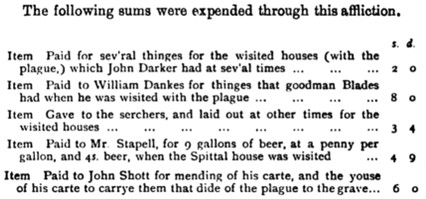
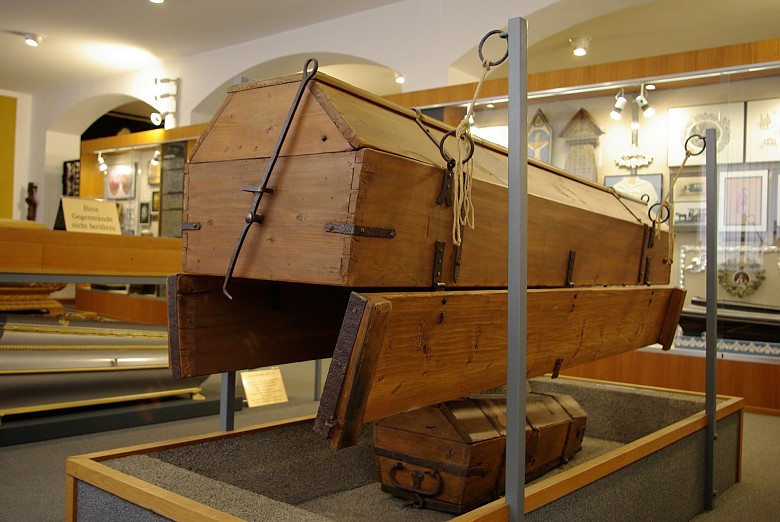
Pade to John the giner (joiner), for a coffin to stand bye, to carrye poure people to the grave 55s 0 d .’ Dartford Church Wardens Accounts 1644
Powell Prepares Dartford for the Levellers
Powell’s Puritan outlook and Millenarian views gained support from Dartford’s middling sort and from local ‘mechanics’ of lesser means. These people rejected the old hierarchical Anglican church headed by the King and his bishops. They wanted to see a more equal society. When ‘Freeborn John’ Lilburne and John Wildman issued their early January 1648 appeal to followers in Kent to petition on behalf of the Agreement of the People, they sent that request from Dartford, on the main London road to Dover. They also proposed a meeting of Kentish supporters to be held at Dartford later that month. Dartford was open to the Leveller programme because of Vavasour Powell’s influence on the town whilst he was, rector from 1644 to 1646.
Powell Upholding the Christmas Ban in Dartford in 1644
A week before Christmas in 1644, with the plague only just beginning to subside, Parliament passed laws that effectively banned the celebration of Christmas. At St Paulinus, Crayford, Edward May, and his parishioners rebelled against this decision. In Dartford, Vavasor Powell was happy to comply. Christmas Day that year fell on one of Parliament’s monthly days of prayer and fasting to bring about an end to the war. Powell refused to open his church for what he believed was a Roman Catholic/Pagan celebration (Sol Invictus –The Roman Winter Solstice on 25 December). Powell and his fellow Puritans sought to ensure that mince pies, plum pudding and decking the halls with holly and ivy were banned that Christmas.
Powell Leaves Dartford to Join the Siege of Oxford in 1646
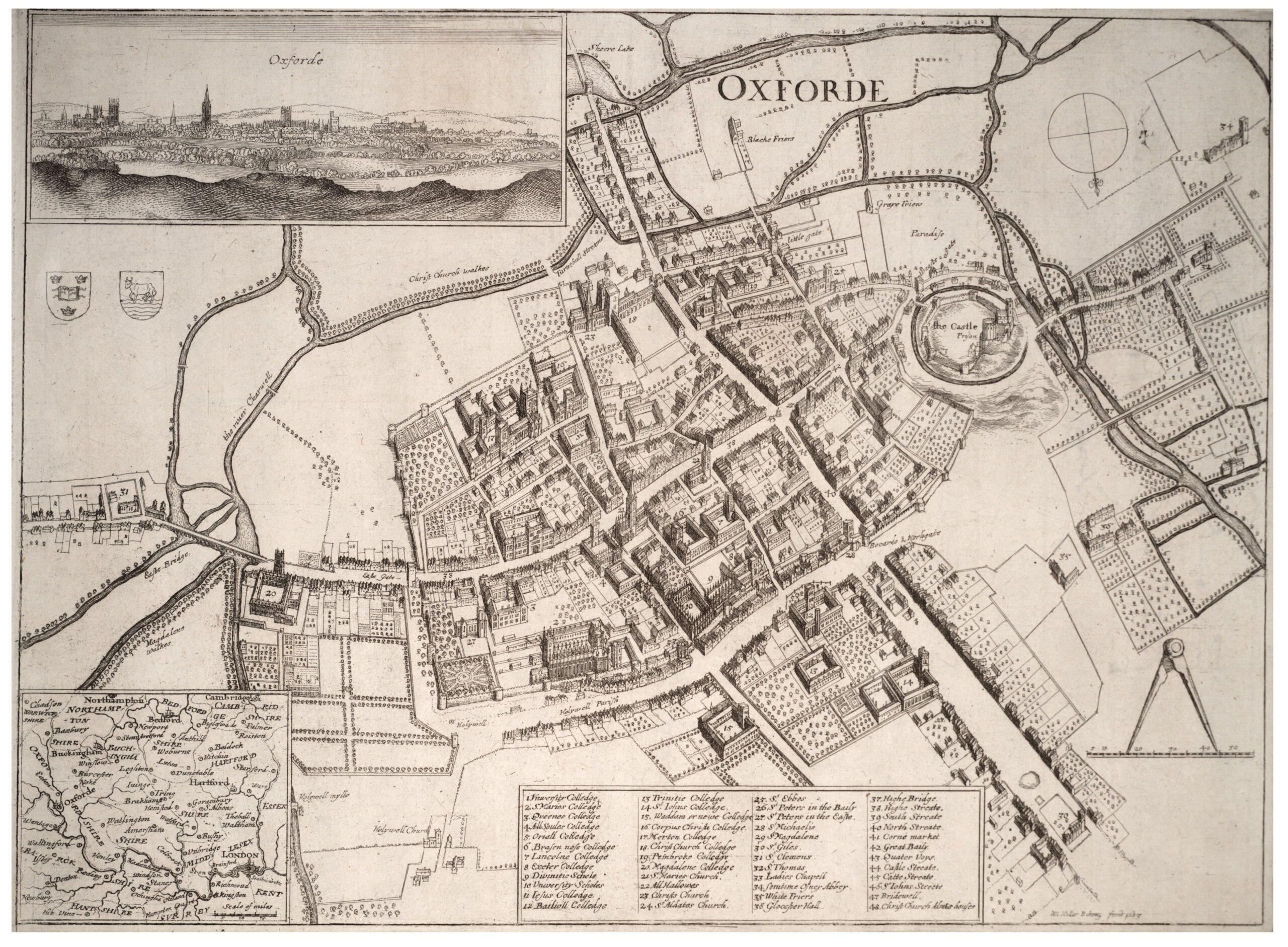
In 1646, Vavasour Powell left Dartford for Oxford believing he could help to bring about the end of the Royalist cause by finally defeating King Charles I. He was so eager to join up with the New Model Army at Oxford that he left Dartford before they had found a replacement for him as rector. Dartford Parish records record:
Pad [paid] for a horse two [to] John Shoute for to fetch a Minister from London and two carrye him two London two preach . . . when Mr Powell was goon [gone] to the sege [siege] of Ockford [Oxford]. Dartford Church Warden’s Account Book January 1646
To the frustration of Vavasor Powell, Charles I escaped Oxford disguised as a servant in April 1646. Charles hoped to do a deal with the Scottish Presbyterian army besieging Newark, but they instead imprisoned him in Newcastle-upon-Tyne. The Scots ransomed him to the English Parliament for £100,000, in January 1647. Nobody was sure what would happen next. it opened up a period of debate amongst the soldiers of the New Model Army about how England should be governed. The ideas of The Levellers came to the fore at the Putney Debates in 1647. Dartford would see one of their key figures come to the town in 1648 to gather support for ‘An Agreement of the People’ which sought greater equality in England. Vavasour Powell had paved the way for their visit.
What happened to Vavasour Powell after he left Dartford?
In 1646, when Parliament’s victory was certain, Powell left the New Model Army and returned to Wales. Although he had refused to be ordained by the Presbyterians, the dominant force in Parliament, Powell was appointed to a Parliamentary commission in 1650, tasked with spreading the gospel in Wales. In 1653 Powell returned to London to preach at St Ann Blackfriars after the death of their pastor, William Gouge. Having denounced Cromwell for accepting the office of Lord Protector, he was imprisoned.
At the Restoration, on 18 July 1660, the Council of King Charles II issued an order to Sir Matthew Price, High Sheriff of Montgomeryshire to take into safe custody Vavasour Powell (described as, “a most factious and dangerous minister”), Powell was imprisoned for seven years at Southsea Castle. He was set free in 1667, but in the following year, he was again imprisoned and was in custody until his death on 27 October 1670. Powell is buried at Bunhill Fields cemetery in London.


No Comments
Add a comment about this page