Was there an African Presence during the English Civil War?
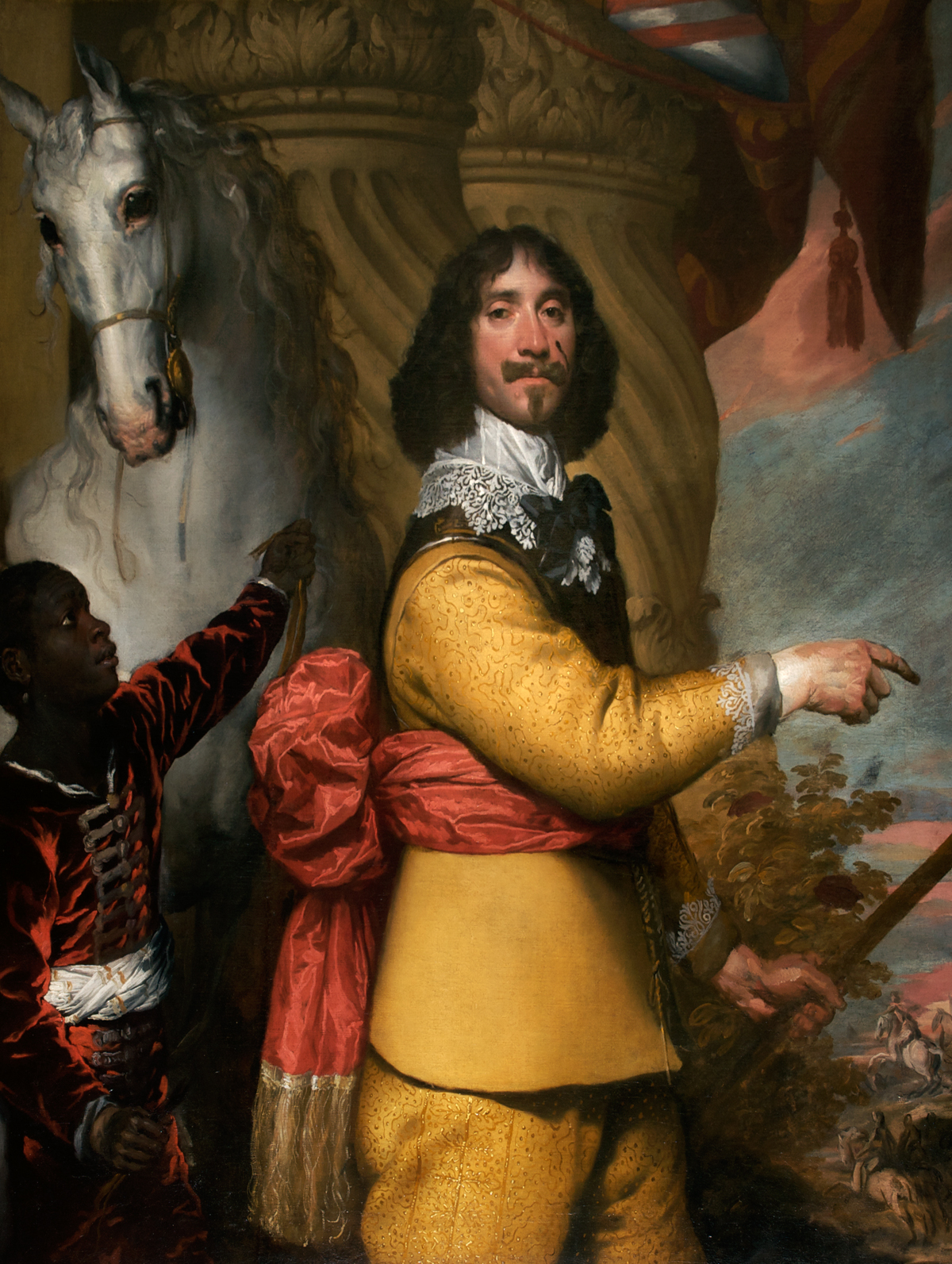


As part of our project, CRAY wanted to address questions we had been asked as to whether there was a Black presence in the English Civil. To do this we interviewed CRAY historian Peter Daniel, Stuart Orme-Director of the Cromwell Museum and Sophie Merrix of Lancaster University, whose PhD is focussed on Black Africans in Stuart England, 1603-1714. We also liaised with Denise Greany at the National Civil War Centre in Newark, who very kindly shared with us a short film they made about a Black Royalist soldier called John Americanus.
A British Black Presence
In recent years much work has been undertaken by historians such as Miranda Kaufmann into the Black presence in Tudor England. Her book, Black Tudors has uncovered evidence of hundreds of people of African origin living in Tudor England (1485-1603). Although a majority, around a third, were uncovered living in London, there were Black communities living in most of England’s port cities such as Southampton, Bristol, and Plymouth. Kaufmann’s work has made many people realise that the story of Black people in this country began long before the arrival of the Empire Windrush in 1948 and indeed can be traced back to the Roman period, if not before.
Sophie Merrix: Black Stuarts during the English Civil War
As part of our visit to the National Civil War Centre, Denise Greany told us the story of John Americanus. He was an African, Royalist, soldier involved in the Siege of Newark in 1645. The Museum had built a display around this contemporary account:
Amongst the many new arrivals in Newark during the late summer of 1645 was at least one African who was described as a ‘blackamoor’. He was possibly a slave to one of the Royalist officers (possibly even to the Earl of Newcastle who had black servants at Welbeck before the war) but he was most certainly a soldier in the garrison and his exploits were recalled as late as 1695 and told to Abraham de la Pryme. During one of the many sorties undertaken by the garrison during the final siege the ‘blackamoor’ soldier captured a Scottish soldier. In absolute terror, for he had never seen a black face before, the Scotsman exclaimed ‘O God! O God! O God! Have mercy upon my soul, the de’ils got my body’. He absolutely refused to go with his captor back into Newark and so eventually had to be killed.119 His presence at the garrison is witnessed by a baptismal entry dated 30 March 1645, which recorded that a ‘John Americanus, a blackamore’ was christened. ‘These Uncertaine Tymes’, Stuart Jennings, p49
We are grateful to the National Civil War Centre for giving us permission to include their dramatic interpretation of this scene on the YouTube clip included with this article.
A Black Presence in Kent?
Historian Sophie Merrix believes that African groomsmen were common in aristocratic households during the 17th century. We wondered if this would have been true for where we lived in Kent. We researched local events that took place during the Civil War for any clues about a Black Kentish presence. One story from 1642 provided a hint rather than firm evidence.
At the beginning of the Civil War, Cobham Hall, near Gravesend was raided by an advance guard of Parliamentary troops under the command of Colonel Lamb. They had been sent from London into Kent to seek out Kentish royalists and collect arms and plates for the financing and arming of the Parliamentary army. Lamb men were not the only troops tasked with supplicating Kent. Colonel Edwin Sandys, the husband of Catherine Champneys of Hall Place, Bexley, was also sent into Kent. His infamous journey of iconoclastic destruction destroyed the interiors of Rochester and Canterbury cathedrals in 1642.
On 19th August 1642, Colonel Lamb left Dartford to raid Cobham Hall, near Gravesend. A contemporary account describes what happened after they left Dartford to raid Cobham Hall:
“There met at Moor-Ditch (in London) some parliamentary troopers, every man furnished with armour and carbines, and some three hundred or thereabouts of dragooners all under the command of Colonel Lamb; these marched all night and Saturday morning and rested not until they came to Dartford; when they waited for two or three hours; and after that time were called together by sound of trumpet, and then advanced to Cobham Hall, the seat of the Duke of Richmond, when it was reported that there was a store of ammunition. Upon their reaching the Hall the lady through fear, sent out word the magazine should be given up, and the party thus getting easy possession loaded five waggons with the spoil which they sent to London; they also seized three Barbary horses valued at £200 each”. Dartford Friday 19th August 1642
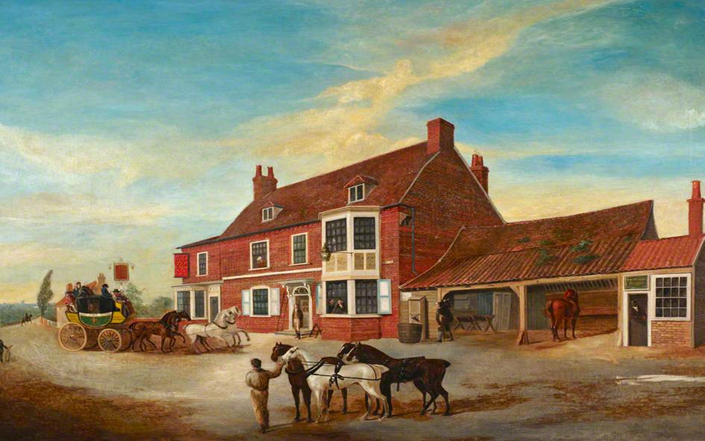
The mention of Barbary horses from North Africa raises the intriguing prospect that these too may have been cared for at Cobham Hall by Black grooms. As London had by far the largest Black community at this time, the sight of Black grooms cannot have been uncommon for the people in Crayford and Dartford, that lived along the Dover Road. Bexley Local Studies and Archives has a painting, albeit from the early 19th century, that shows a Black groom at the Nags Head Coaching Inn, at Welling. This would appear to confirm that it was a well-established profession for those of the African diaspora for a significant period after the Civil War.
A Black Presence on the Battlefields of the English Civil War
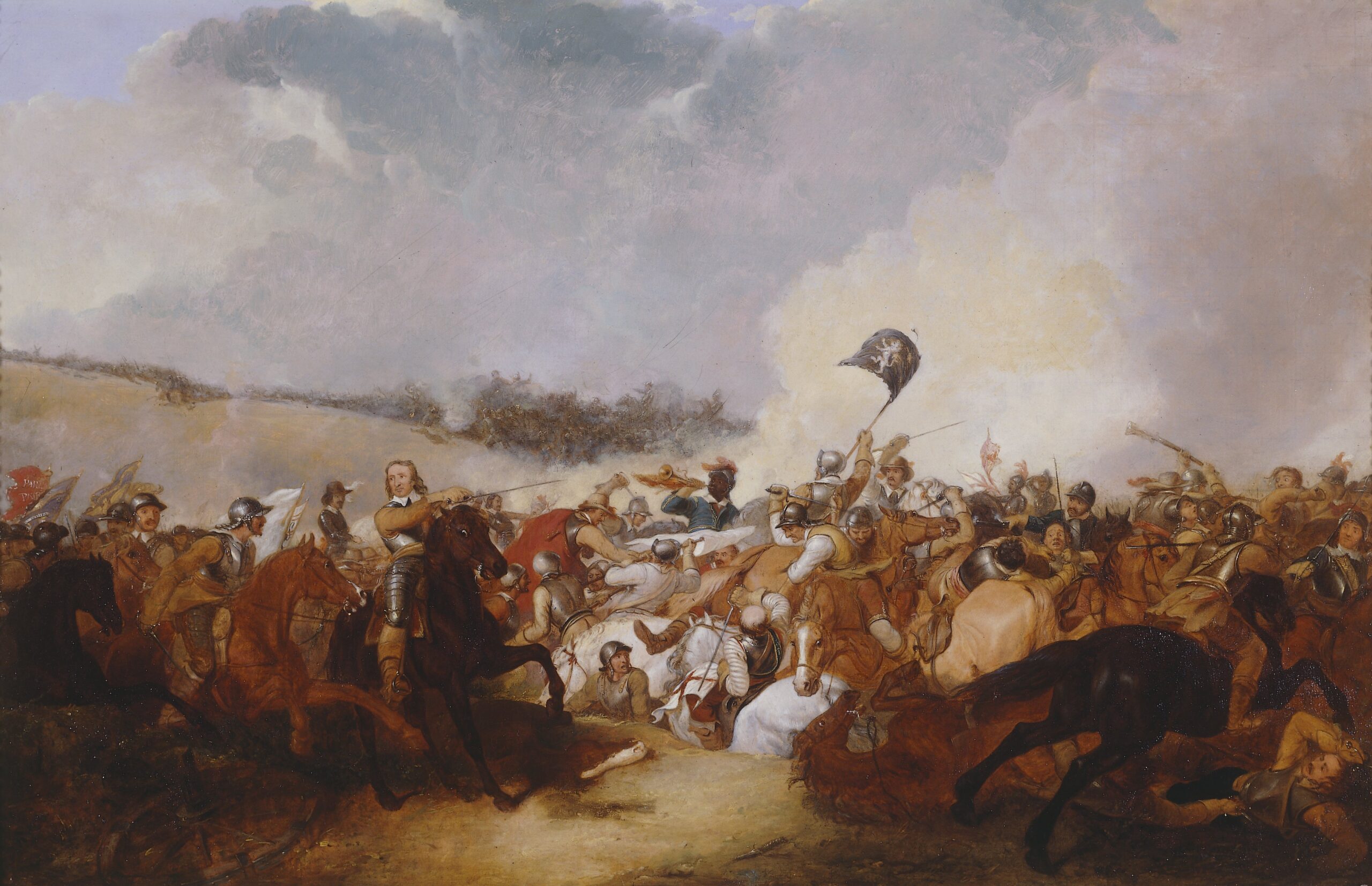
In his interview with CRAY, The Cromwell Museum Director, Stuart Orme, discusses the likely presence of Africans on the battlefield at Naseby in 1645. This was the same year in which John Americanus took part in the Siege of Newark. The Cromwell Museum has a fantastic image of the battle that was painted in the Victorian era by artist Abraham Cooper. If you watch the film you will hear Stuart discuss the likelihood of this being a realistic assumption for events that took place two hundred years before Cooper composed it.
African musicians were certainly not unknown in the Stuart era and earlier. John Blanke was a royal trumpeter in the Tudor courts of Henry VII and Henry VIII and remains the only Black Tudor for whom we have an identifiable image. While serving two kings, he bore witness to some of the great moments in England’s history and contributed to some of the greatest spectacles of the Tudor age. His image is found on the Westminster Tournament Roll, which dates to 1511. You can see John Blanke on the link here:
https://www.hrp.org.uk/tower-of-london/history-and-stories/john-blanke/#gs.lpzs5m
Dr Thomas Vane and Mary Stuart Princess Royal
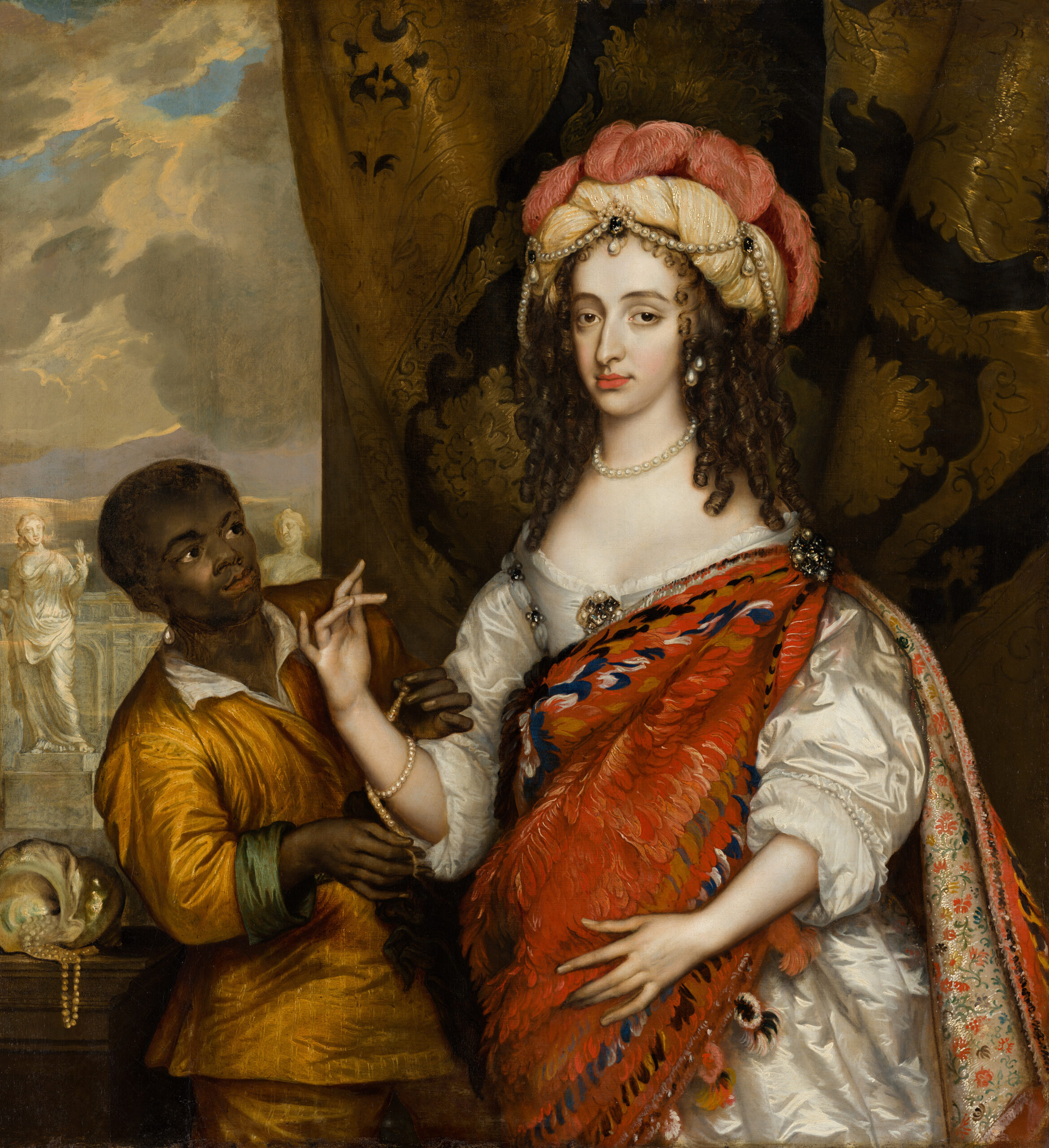
In January 1640, Queen Henrietta Maria asked Crayford’s rector, Dr Thomas Vane, to provide religious counselling to her daughter, Mary Stuart, Princess Royal, so that she was prepared to marry Prince Willem of Orange, heir to the Dutch throne. The Netherlands had extensive trading links in Africa which meant that port cities like Amsterdam and Rotterdam and significant populations of people of African descent. Evidence of this is found in a later portrait of Mary as Queen of the Netherlands. Her posthumous portrait by Dutch artist Adriaen Hannemann, shows her with an African servant. Once again it is interesting to speculate if Crayford’s Dr Vane would have met one of Willem of Orange’s African servants whilst ministering to the young couple at Somerset House in 1640. It’s quite likely that Queen Henrietta Maria would have had Black servants. She is shown in a painting by Daniel Myrtens titled, Charles I and Henrietta Maria Departing for the Chase c. 1630-2. It would appear that it would not have been unusual to see African faces in the Royal household.
Mary Stuart sadly died at just 29 years of age in 1660. Hannemann’s portrait was painted two years after her death just after the restoration of Charles II as King of England. Mary is shown dressed as an ‘American’ or ‘Indian’, ready to go to a fancy dress ball. She is wearing a cloak of feathers and an ostrich feather turban. The picture is typical of the period in which the wealthy sought to portray themselves a being more exotic by dressing in such a fashion or being painted beside a black servant. Both Myrten’s portrait of Charles I and Queen Henrietta Maria and Hanneman’s of their daughter Mary were painted at a time when European imperialism was in its infancy. The crowned heads of Europe wished to demonstrate their power and reach beyond their own shores and did this by associating themselves with the continent of Africa.


No Comments
Add a comment about this page